Why Idling Vehicles Could Be Costing Your Fleet Thousands Every Year
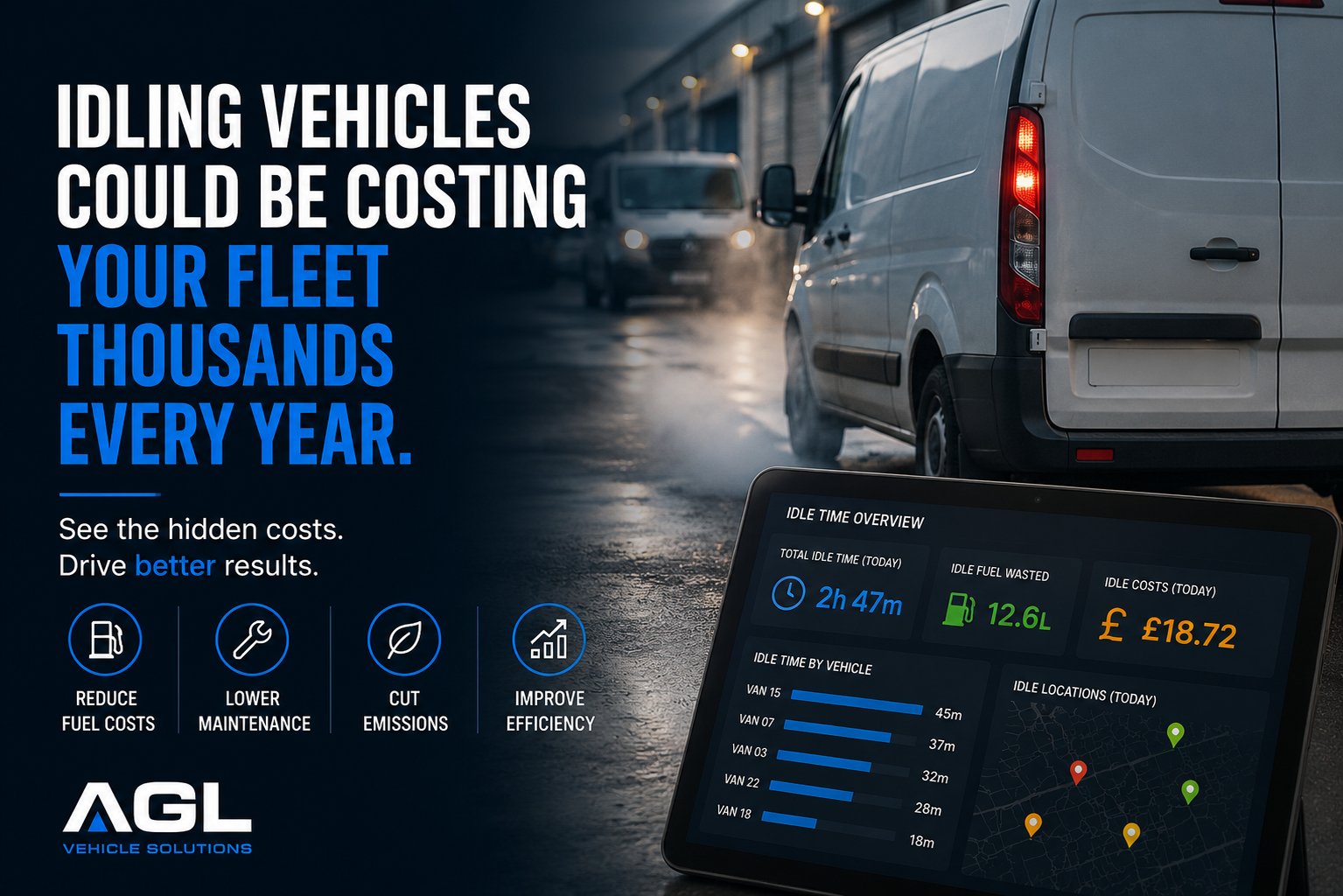
Small periods of engine idling may seem harmless, but across an entire fleet they can quietly become one of your biggest unnecessary costs.
Every fleet manager keeps an eye on fuel costs.
Most review maintenance.
Many monitor insurance premiums.
But one of the biggest hidden expenses often goes unnoticed.
Vehicle idling.
Leaving an engine running for "just a few minutes" doesn't seem like a major issue.
Multiply that across dozens of vehicles, every day, for an entire year, and the numbers become surprisingly expensive.
Modern fleet technology makes this easy to identify—and even easier to improve.
What Is Vehicle Idling?
Vehicle idling is simply when an engine is running but the vehicle isn't moving.
Examples include:
- Waiting outside a customer site
- Sitting in traffic longer than necessary
- Leaving the engine running during paperwork
- Loading or unloading
- Warming vehicles unnecessarily
Some idling is unavoidable.
Much of it isn't.
The Hidden Cost
Excessive idling affects much more than fuel consumption.
It can increase:
- Fuel costs
- Engine wear
- Maintenance costs
- Emissions
- Service intervals
- Vehicle downtime
Across a fleet, these small losses quickly become significant.
Why Most Businesses Don't Notice
You can't improve what you can't see.
Without live vehicle data, excessive idling often goes unnoticed.
Drivers aren't deliberately wasting fuel.
Managers simply don't have the information needed to identify patterns.
That's where fleet tracking changes everything.
How Fleet Tracking Helps
Modern tracking systems can show:
- Exactly how long each vehicle spends idling
- Which drivers idle the most
- Where idling regularly occurs
- Daily, weekly and monthly trends
- Fleet-wide performance reports
Instead of assumptions, businesses receive real operational data.
Small Changes Create Big Savings
Many businesses don't need dramatic operational changes.
Simple improvements often include:
- Reducing unnecessary warm-up time
- Reviewing loading procedures
- Identifying repeat waiting locations
- Coaching drivers using real data
- Improving job scheduling
Even reducing idling by a few minutes per vehicle each day can produce meaningful annual savings.
Better for Drivers Too
Reducing idling isn't just about fuel.
Drivers also benefit from:
- Less vehicle wear
- Better route planning
- Fewer unnecessary delays
- Improved productivity
- Clearer expectations
The result is often a smoother working day for everyone.
Visibility Drives Better Decisions
Fleet managers make better decisions when they have accurate information.
Knowing where vehicles are is valuable.
Understanding how they're being used is even more valuable.
The most efficient fleets aren't always the ones with the newest vehicles.
They're the ones using the information available to operate smarter.
Final Thoughts
Every unnecessary minute an engine spends running costs money.
Most fleets already have opportunities to reduce idling—they just haven't identified them yet.
With the right visibility, businesses can reduce fuel consumption, improve efficiency and make better operational decisions without adding more vehicles or more staff.
Call to Action
Want to understand where time and fuel are being lost across your fleet?
Book a live demonstration with AGL Vehicle Solutions and discover how real-time tracking can help reduce unnecessary idling, improve efficiency and lower operating costs.
📞
0800 009 6419
📧
aglsales@agl-ltd.co.uk